An astrology career path reading uses your birth chart, often the Midheaven, the 6th house and key planets, as a symbolic prompt for reflecting on how you work. Pair it with real evidence and make the decision yourself. A list of jobs for your Sun sign cannot weigh your actual skills, responsibilities or options. This guide shows how a reading works, how to approach Astrofluence’s free read, and how to turn a useful question into a small test.
Definition: What an astrology career path reading is
An astrology career path reading interprets the placements in your birth chart as symbols for how you tend to work: where you seek recognition, how you handle daily tasks, what pace suits you. It is a reflective lens, not a verdict. The chart describes themes; your work history supplies the evidence.
Two terms come up constantly:
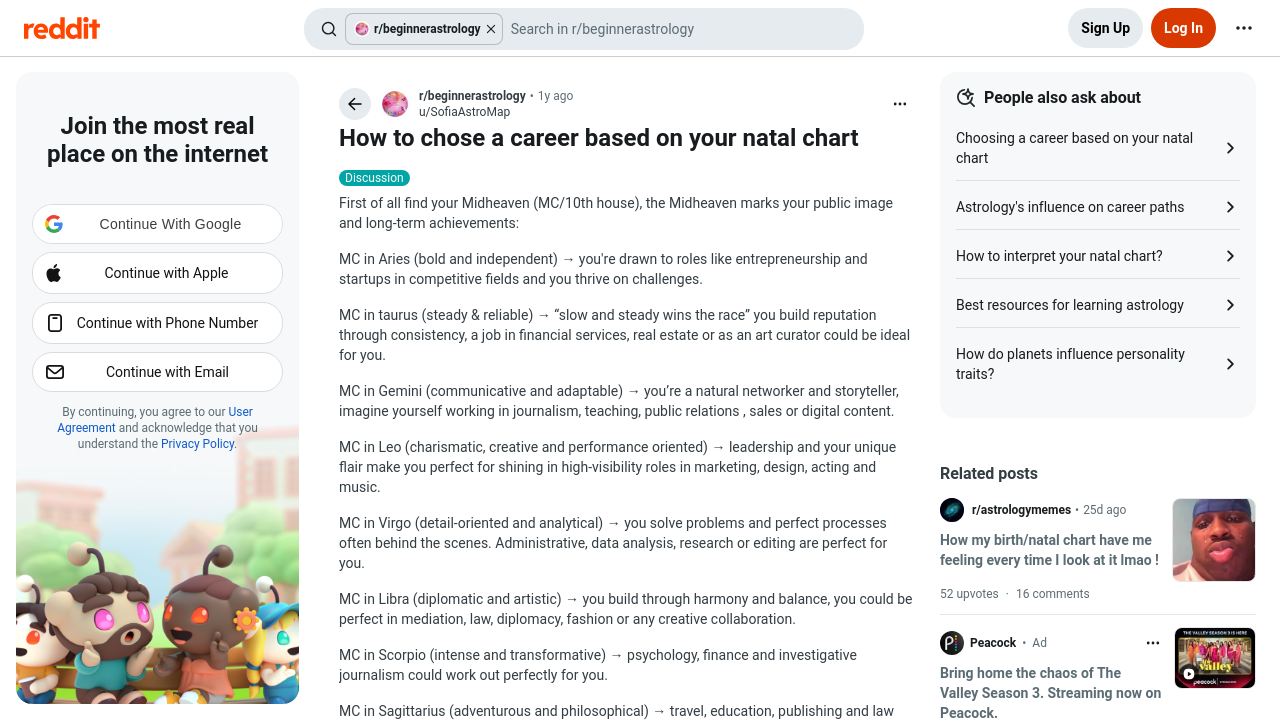
- Midheaven (MC): a chart angle calculated from birth time and place, traditionally linked with public role and reputation. Career question: what kind of visibility do I want?
- 6th house: the area tied to daily work, routines and service. Career question: what does a good ordinary Tuesday look like?
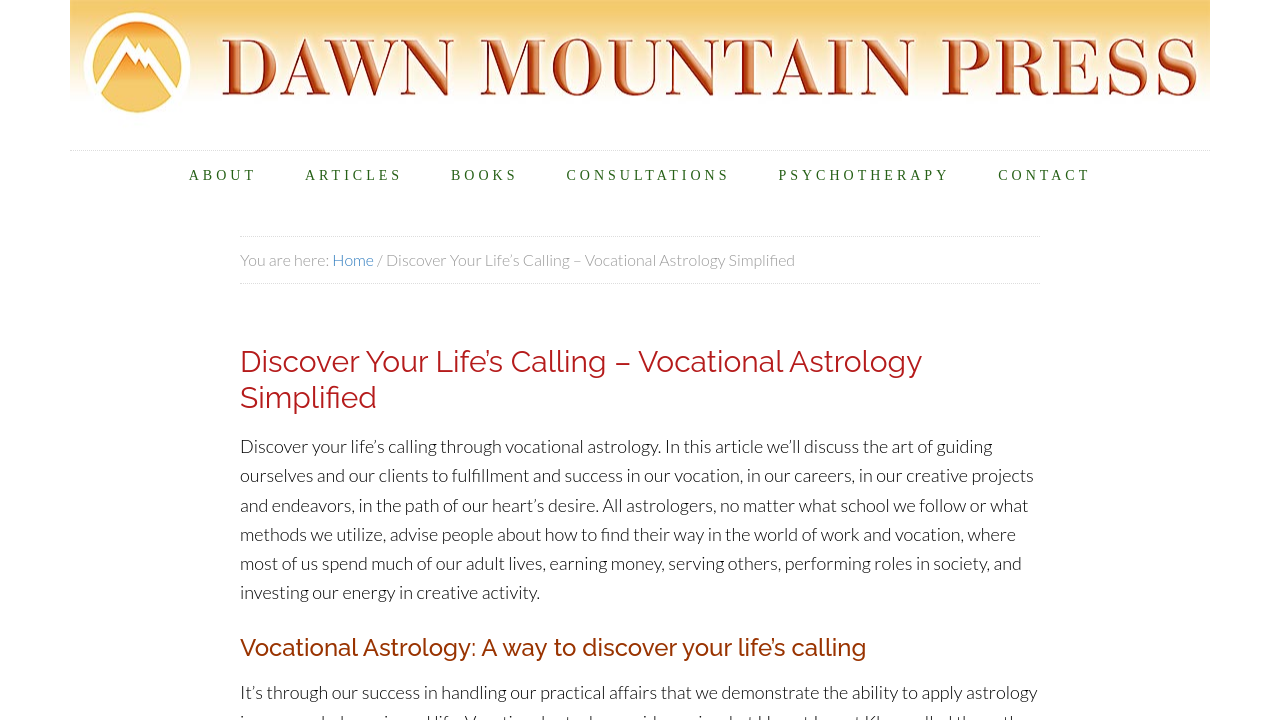
The vocational tradition separates these deliberately. As Dawn Mountain's guide to vocational astrology puts it, the 10th house calling may differ from the 6th house job or trade, so livelihood and calling are two distinct tasks.
The reading offers a structured way to ask questions. It cannot measure your ability or establish which job will suit you.
In plain language: a career reading is a mirror with labels on it; it helps you notice patterns, and you decide what they mean for your work.
How it works: from birth details to one career question
What a chart reading looks at
A reading can consider several factors rather than assign a job to one sign. Dawn Mountain’s vocational astrology guide describes this broader interpretive approach. These factors are symbolic prompts, not validated career predictors:
- The Midheaven and 10th house for visibility and role.
- The 6th house for daily rhythm and workload.
- Key planets such as Mars (how you take action) and Venus (what you value).
- The overall pattern, because different symbols may suggest different questions.
Technical choices also shape a chart. Astrofluence uses Western tropical astrology. Read house-based interpretations with a reliable birth time and the stated house system. A general career reading is not a promise that the free product includes a separate solar-return chart.
A walkthrough of a free read
Here is how to approach Astrofluence’s free read:
- Inputs: your birth details and one question about work. Mark your time unknown if you do not know it.
- Scope: a work question, such as direction, working rhythm or a choice you want to think through.
- Archetype: a Career Archetype can name a pattern in available chart signals. It is not a skill score or a job assignment.
- Method: the app calculates its Career Archetype from chart signals. The interpretation is separate; a repeatable score is not scientific proof of a personality type.
- Next move: choose a small, realistic action from ideas that fit your situation, then decide when to review it.
- Unknown birth time: leave house and Midheaven conclusions open without a reliable time. Birth-date numerology can still be calculated.
| Free read element | What you get |
|---|---|
| Inputs | Birth date, time, place, one question |
| Duration | Depends on the details you need and the time you take to read |
| Price | $0 |
| Areas read | A question about your working patterns and choices |
| Output | A reflective reading to compare with experience, with chart-based patterns where available |
A hypothetical example: turning a reading into a test
Hypothetical: a marketing coordinator asks, “Should I move toward client-facing work?” Using a visibility theme as a prompt, she chooses a small test: present one project update to colleagues and review the experience six weeks later. This is an illustrative choice, not a sample of a guaranteed app output.
That is the symbolic part. The evidence part is separate. Before the review date, she writes down three things after each presentation: energy afterward (1 to 5), feedback received, and whether she would volunteer again. At six weeks she looks at her notes, not her chart. If the notes say presenting drained her, the reading prompted a useful test that answered no. That still counts as progress.
Takeaway: treat the reading as a hypothesis generator and your work log as the judge.
Why it matters: three ways people use it for a real decision
Astrofluence is for people thinking through work decisions. These three examples show where a reading can supply questions and where real-world evidence must take over.
1. Staying versus leaving a role. A reading can prompt you to examine working conditions, such as whether constant interruptions make focused work difficult. List specific problems, then test whether a change inside the role helps before deciding to leave.
2. Pricing and positioning for freelancers. A reading may prompt a question such as: do I undercharge for work that feels easy to me? It cannot set your rate. Compare the work, market and client responses separately. Astrofluence does not choose jobs, investments or financial moves for you.
3. Timing reflection. A yearly reflection can help you choose what to pay attention to. If you use a solar-return theme, treat it as a question, not a date for quitting, signing or investing. Check practical deadlines and constraints separately.
Takeaway: each use ends in a question you answer with evidence about your work.
Common misconceptions
Misconception: A chart proves your career or income
Reality: no placement proves earnings or success. A chart offers symbols. Judge a reading by whether it helps you form a specific question you can check, rather than by whether a broad description sounds familiar.
Misconception: Astrology picks your job
Reality: a reading cannot weigh your skills, finances, location or the job market for you. Use it to consider a work pattern, then make your own decision.
Misconception: Every sign has a fixed list of jobs
Reality: a symbolic association does not establish a job match. Lists connecting signs or planets to occupations cannot assess your training, working conditions or interests. Ask about a pattern in your work rather than accepting a job title.
Misconception: Astrology is scientifically proven
Reality: a chart calculation and its interpretation are different things. Repeatable positions do not validate claims about your career or personality.
Takeaway: keep symbol and evidence in separate columns.
Related concepts
Midheaven
A chart angle based on birth time and place, traditionally associated with public role and reputation. Useful question: how visible do I want my work to be?
6th house
The part of the chart tied to daily work and routines. Useful question: what working conditions let me do my best ordinary day?
Vocational astrology
The branch of astrology focused on work and calling. It separates livelihood from calling, which helps when your income and your central project differ.
Solar return
A chart for the Sun’s annual return to its birth position. It can be a reflection prompt rather than a schedule. Do not assume it is included in every free reading.
Nakshatras
Lunar divisions used in Vedic astrology. This differs from Western tropical astrology; do not treat terms or results from the two traditions as interchangeable.
Numerology
A symbolic system using numbers from your birth date. Astrofluence’s calculation preserves master numbers 11, 22 and 33. It does not need a birth time; its meaning remains symbolic.
How to get started

- Gather your birth details: date, place and, if possible, time from a birth certificate.
- Write one career question in a single sentence, such as "Should I take on a team lead role?"
- Read my chart for free
- Set up an evidence log for the small test you choose: what you did, how it felt, what happened.
Takeaway: one question, one move, one log.
FAQ: Frequently Asked Questions
What will my career be in astrology?
Astrology cannot tell you what your career will be. A chart can suggest themes about how you like to work, which you can turn into small experiments and judge by real results before deciding anything.
Can ChatGPT tell astrology?
A chatbot can explain terms, but a fluent answer does not prove it calculated your chart correctly. Check the underlying birth data and calculation source. Astrofluence’s Career Archetype calculation is separate from the interpretation of those signals.
Do I need my birth time?
It helps, because houses and the Midheaven depend on it. If your time is unknown, say so and leave those conclusions open. Birth-date numerology can still be calculated.
Which chart placements matter most for careers?
Career readings commonly look at the Midheaven, the 6th house and vocational planets such as Mars and Venus together. No single placement settles anything; the overall pattern gives the more useful reflective prompt.
Is astrology scientifically proven?
Astrofluence does not claim that astrology can scientifically predict a career. Use the symbolic interpretation to form questions, then compare them with evidence from your actual work.
Does Astrofluence pick a job for me?
No. Use the reflective reading and any available chart patterns to develop a question or a small test. Compare what you learn with your skills, needs and options. Choosing the job stays with you.
How much does Astrofluence cost?
The free read costs $0. It is separate from paid workspace access; check the current pricing page before choosing a paid option.
Conclusion
A career reading earns its place when it leads to a useful test, not a fixed label. This week, choose one relevant question from a reading, design a small test that fits your responsibilities and set your own review date. Judge it by what happened at work, including evidence that does not fit the reading.