
A midheaven calculator is accurate as a chart calculation when your birth date, birth time, birthplace, and chart settings are correct. Its career interpretation is not a prediction or proof that a particular job suits you. Check the inputs first, then turn the reading into a small workplace test rather than a career verdict.
- Is a midheaven calculator accurate? Yes for a correctly configured birth chart, not for predicting career success.
- Birth time, birthplace, and zodiac settings matter more than whether a career reading sounds familiar.
- Astrofluence is best for people using career astrology as reflection, not as a prediction.
- Use your Midheaven sign to frame a work question, then test it against actual feedback.
Is a midheaven calculator accurate?
Yes for calculating the Midheaven. No for proving your ideal career. Those are different claims, and you need to judge them separately.
The Midheaven, often shortened to MC, is a calculated point where the ecliptic meets the upper part of the local meridian. It depends on when and where you were born. A calculator assigns that point a zodiac position using its chosen settings.
The interpretation comes afterward. A paragraph about leadership, public responsibility, or professional direction is a reading of that position, not an additional astronomical measurement.
If you need help identifying the point before checking its accuracy, start with how to find your Midheaven sign. Keep the birth details you used alongside the result so you can reproduce it.
| What you are checking | Best for | What it establishes | What it does not establish |
|---|---|---|---|
| Midheaven calculation | Verifying your chart position | A zodiac position derived from birth details and settings | Whether you will succeed in a profession |
| Career interpretation | Framing a work question | A reflective meaning attached to that position | A validated assessment of your abilities |
| Workplace test | Checking a career idea | Evidence from a task, conversation, or piece of work | A guarantee about your whole career |
The calculation offers consistency when the inputs and method stay the same. The interpretation offers a question you can use. A workplace test offers evidence, but only about the situation you actually tested.
Do not substitute one for another. A precisely calculated point can still lead to an interpretation that does not help your current decision.
Why this matters
A difficult Monday can make any clear career answer feel attractive. You want someone to tell you whether to leave, retrain, raise your rates, or accept the offer. A chart cannot settle those decisions for you.
For a career decision in 2026, separate the question about the calculator from the question about your work. The first concerns birth records and settings. The second concerns your responsibilities, skills, finances, preferences, and available choices.
Suppose a reading makes you think about public-facing work. That does not mean you should resign and become a consultant. It means you have a question worth testing: do you enjoy explaining your work to people who need it?
A useful reading ends with something you can check. A reading that simply announces your destiny gives you no practical way to evaluate it.
Calculation accuracy: check the source details
Start with the birth information, not the career paragraph. A calculator cannot repair an incorrect input just because its output looks polished.
Check your birth date, including the order of the day and month. Check whether the birth time was recorded or remembered. Check the birthplace selected by the calculator rather than assuming a matching city name identifies the right location.
The software also needs to translate the local birth time correctly. Time zones and daylight-saving rules are part of that task. Historical clock rules belong to the date and location of birth, not automatically to the rules used there in 2026.
If the birth time is uncertain, keep that uncertainty visible. Do not enter a convenient time and then treat the resulting Midheaven as confirmed. A precise-looking result does not make an estimated input precise.
You can still reflect on your career without a confirmed Midheaven. Write down the work question directly, such as whether you want more responsibility or less interruption. You do not need to manufacture chart certainty to investigate it.
Interpretation accuracy: check the claim
A career interpretation is not accurate in the same sense as a calculated position. You can reproduce a calculation by repeating the inputs and method. You cannot establish a career claim merely by rereading it and feeling understood.
Recognition is a starting point. Evidence is the next step.
If a reading says something that fits your work, name the specific event behind that reaction. Did you enjoy presenting a proposal? Did you dislike being accountable for a project without authority? Did a client respond well when you explained a difficult choice?
Then look for a counterexample. Perhaps you enjoy presenting familiar material but dislike selling. Perhaps you want responsibility over your own work, not responsibility for a team. Those distinctions matter more than a broad label.
Keep the interpretation only as a working question. It should help you notice a pattern, not prevent you from seeing evidence that contradicts it.
Why Midheaven results vary
Different results do not automatically mean one calculator is wrong. First establish whether the calculators received the same information and produced the same kind of output.
These factors explain what you need to check:
- Birth date: A reversed month and day changes the input. Read the completed form before comparing results.
- Birth time: An estimate and a recorded time are not equivalent. Keep the source of the time attached to your chart notes.
- Birthplace: Confirm the selected location. A city name alone does not always distinguish between places with the same name.
- Time conversion: Local birth time needs the correct time-zone and daylight-saving treatment for that date and place.
- Chart settings: Tropical and sidereal zodiac labels are not interchangeable. A house label and an MC label also need to be distinguished.
- Interpretive wording: Different career paragraphs can describe the same calculated point. Different wording is not evidence of a calculation error.
For a comparison made in 2026, save the settings as well as the result. Otherwise, you are comparing outputs without preserving the conditions that produced them.
The practical rule is simple: resolve an input or settings difference before judging the reading. Do not choose whichever result describes the career you already want.
How do you check a Midheaven calculator yourself?
Use a short verification sequence. You are checking whether the result follows from your details, not whether the prose feels persuasive.
- Check records. Find the best available source for your birth date, time, and place. Distinguish recorded information from family recollection.
- Match inputs. Enter the same details in each calculator you compare. Confirm the selected birthplace and the time format.
- Match settings. Use the same zodiac setting. Check how each result distinguishes the Midheaven from house labels.
- Compare positions. Compare the MC sign and degree before reading the career interpretation. Investigate rounding and settings before declaring a disagreement.
- Test meaning. Convert the interpretation into one question about your actual work. Answer it through a task or conversation.
You do not need a collection of readings. You need a clear input record and a result you can reproduce. Additional interpretations will not resolve an incorrect birth time.
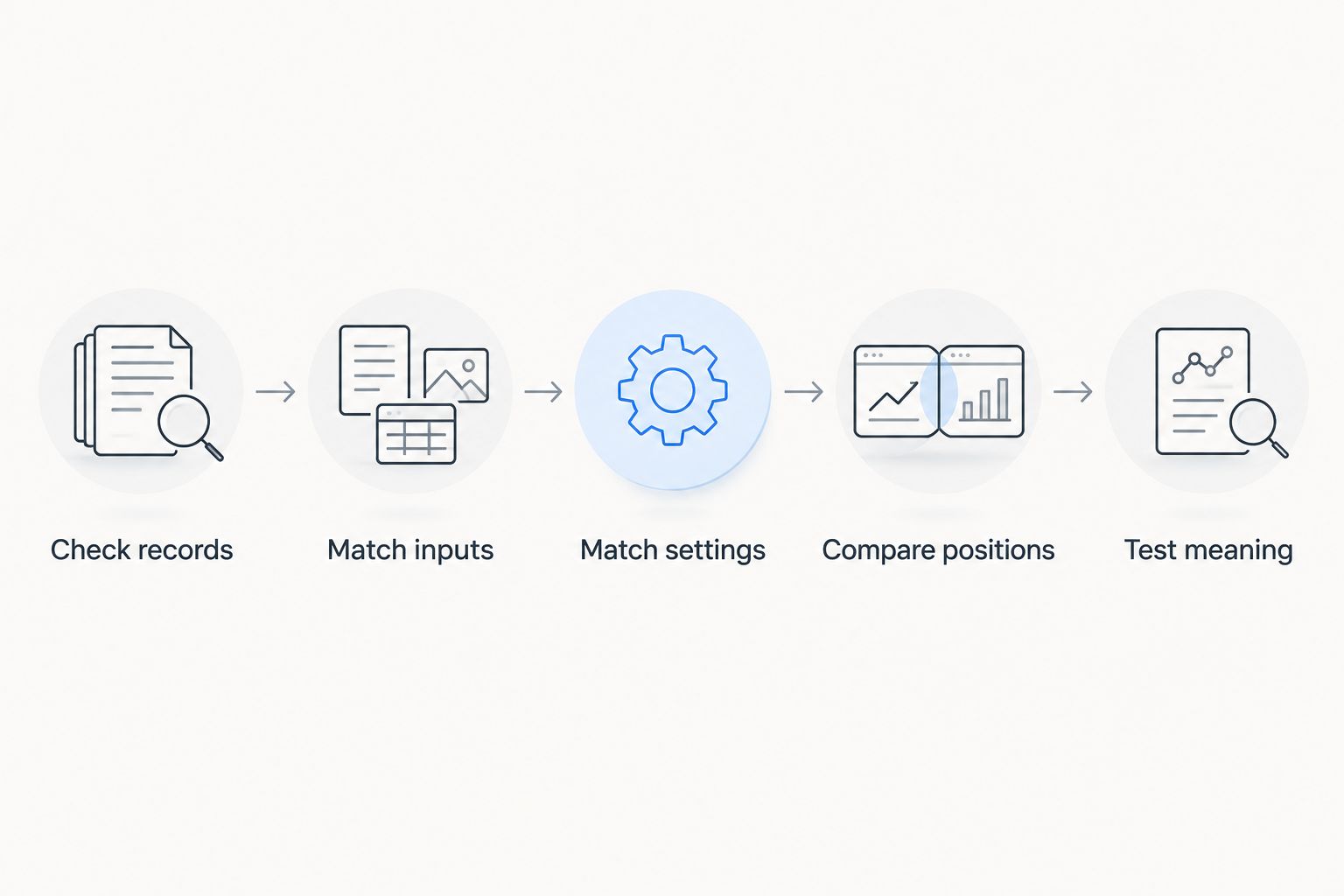
Once the calculation agrees, stop checking the same chart and start examining the career question. Agreement tells you the calculation is consistent. It does not establish that the interpretation predicts your future.
Does changing the house system change your Midheaven?
Changing the house system does not, by itself, change the astronomical Midheaven point for the same birth details and zodiac reference. It changes how houses are divided and how that point relates to the house layout.
In Placidus, the Midheaven is the cusp of the 10th house. In whole-sign houses, the 10th house is an entire sign, and the Midheaven is not necessarily its starting point.
That distinction matters when you compare labels. A calculator displaying the sign of the 10th house is not necessarily displaying the MC sign. Check what the label actually refers to before assuming that two tools disagree.
For career reflection in 2026, keep the distinction in your notes: the MC is a point; the 10th house is a section of the chart. Neither assigns you a fixed occupation.
Can your Midheaven tell you which job to choose?
Your Midheaven cannot establish which job you should choose. In career astrology, it is used as a prompt about professional direction, public responsibility, and the work you want to be known for.
That makes it useful for sharpening a question, not replacing a decision process. Instead of asking which job your chart assigns you, ask which responsibility you want more of in your next role.
Compare that answer with the actual offer. Read the duties. Ask about reporting lines, workload, decision authority, and how performance is assessed. A reflective theme cannot tell you whether a particular manager will support you.
The same rule applies to freelance work. If a reading prompts you to think about visibility, test how you explain your offer to a prospective client. Do not treat the theme as evidence that the client will buy.
Where Astrofluence fits
Astrofluence uses exact birth date, time, and place for a structured career read covering direction, work rhythm, money pattern, and timing. Its calculation layer uses the tropical zodiac, Placidus houses, and Pythagorean numerology, including master numbers 11, 22, and 33.
Astrofluence is best for people using career astrology as reflection, not as a prediction. Its stated distinction is between repeatable calculations and interpretive meaning. You make the decision.
That structure gives you concrete subjects to examine: what work you want, how your week functions, and what question you have about money or timing. The limitation is equally clear. A career reading does not prove an offer is right, validate a financial decision, or guarantee a launch outcome.
For your 2026 planning, use the reading beside work evidence rather than above it. A calendar full of interruptions, feedback on a proposal, or the duties in an offer letter can answer questions that a chart cannot.
Turn the reading into a test by Friday
Choose one decision you are actually facing. Leave the rest alone for now.
If you are considering a career pivot, write down the task you want to do more often. Find a small version you can attempt within your current work, a personal project, or a conversation with someone who does that work.
If you are pricing a client offer, separate discomfort from missing information. Draft the scope. Name what is included and excluded. Then ask a relevant person whether the offer is clear, rather than asking the chart to approve the price.
If you are thinking about launch timing, list the conditions that make the launch workable. The offer needs to be understandable, the work deliverable, and the next action clear. Treat timing language as a reflection prompt, not a substitute for those conditions.
Use this note before you begin:
- Decision: What am I choosing?
- Question: What did the reading make me want to investigate?
- Test: What small action can I complete by Friday?
- Evidence: What response or result will I record?
- Next move: What will I change after seeing that evidence?
A test can challenge the reading. That is a useful outcome. If the task drains you or the feedback contradicts your assumption, change the assumption rather than explaining the evidence away.
FAQ
Is a midheaven calculator accurate if I know my birth time?
A Midheaven calculator can calculate the point accurately when your birth time, date, birthplace, and settings are correct. Knowing the time does not validate the career interpretation attached to the result.
Can I find my Midheaven without an exact birth time?
You cannot confirm a precise Midheaven from an unknown birth time. Keep an estimated result labelled as uncertain rather than using it as a firm basis for a career decision.
Why do two Midheaven calculators give me different signs?
Different inputs, time conversion, or zodiac settings can produce different Midheaven signs. Check whether both tools are displaying the MC rather than a house sign before comparing them.
Is the Midheaven always the same as the 10th house?
The Midheaven is the 10th-house cusp in Placidus, but it is not interchangeable with the 10th house in every house system. In whole-sign houses, check the MC point and the house sign separately.
Does an accurate Midheaven predict career success?
An accurately calculated Midheaven does not establish a prediction of career success. Use the interpretation to frame a work question, then assess skills, responsibilities, feedback, and constraints.
Is Astrofluence a career prediction tool?
Astrofluence treats career astrology and numerology as reflection, not prediction. Its calculation layer is repeatable, while the meaning layer helps you examine a decision that remains yours.
What should I do with my Midheaven reading in 2026?
Turn your Midheaven reading in 2026 into one practical work question and a small test you can finish by Friday. Record what happened before deciding whether the interpretation helped.
One last thing
The most convincing paragraph is not necessarily the most useful one. A reading can feel familiar and still leave your decision exactly where it started.
Keep the question that leads to an observable action. By Friday, have a draft, a conversation, or a completed task to examine. Your next move should respond to that evidence, not just to how well the description seemed to fit.