
Your birth chart does not prove how you work. Astrologers do read certain placements, such as the Moon, Mars, Saturn and the houses of work and routine, as symbolic prompts about pace, effort and timing, and you can test those prompts against your own work log. That distinction matters when you are deciding how to structure a job, a week or a career change. The chart raises questions; your actual working days supply the evidence. If you want a starting point, you can Read my chart for free.
In this article
What a work rhythm means in a birth chart

In plain English, a work rhythm is how you pace effort: when your energy rises and falls, how long you can focus before you need a break, and whether you work best in steady daily blocks or in intense bursts followed by recovery.
A birth chart is a map of where the Sun, Moon and planets sat at the moment and place you were born. KnowTheZodiac describes the birth chart as a kind of blueprint and notes that any reading combines multiple layers, placements and aspects, rather than relying on one factor. The same piece mentions rhythm, but mostly in the language of a dream job.
This article takes a narrower and more practical route. The useful career question is not "what is my destiny?" It is closer to this:
- When in the day or week does my best work actually happen?
- What kind of pace drains me, and what kind steadies me?
- Does my current role fit that pace, or fight it?
Treat astrology here as a symbolic framework, not a scientifically proven one. Treat the chart as symbolic interpretation and your work history as evidence. Keep them in separate columns.
Takeaway: define your rhythm question before you look at any chart, so the symbols serve a real decision.
How the chart is read for rhythm
Astrofluence offers a free career read using astrology and numerology, built around your birth details and a question about work. You can bring a question about pace, recovery or routine. The chart calculation uses the tropical zodiac and Placidus houses; the interpretation helps you consider a next step. If your birth time is unknown, say so rather than guessing. Time-dependent placements are limited, while birth-date numerology can still be calculated.
Here is how the main rhythm factors are usually read, each with a question worth testing.
The Moon: energy and recovery
The Moon symbolizes emotional needs, moods and what helps you feel restored. In a work context, astrologers often read it as a pointer to recovery: what refills you after effort.
Question to test: What restores you after a hard workday, and do you actually get it during the week?
Mars: drive and pace
Mars symbolizes how you take action and push forward. KnowTheZodiac's article reads a Mars in Aries as preferring spontaneity and pace, and a Mars in Virgo as leaning toward systems and refinement. That is symbolic reading, not a description you are bound by.
Question to test: Do you start fast and lose steam, or build momentum slowly through repetition?
Saturn: structure and limits
Saturn symbolizes structure, discipline, limits and long effort. Astrologers often look to it for where you need boundaries or slow, patient building.
Question to test: Do deadlines and fixed routines steady you or squeeze you?
Houses of work and routine (Placidus)
Houses divide the chart into twelve areas of life. The sixth house is traditionally read for daily work, habits and routine; the tenth for career direction and public role. Placidus is one method of drawing house boundaries, and it depends on an accurate birth time.
Question to test: Which part of your work feels like routine maintenance, and which feels like the visible role you are building?
Hypothetical example: Imagine someone whose chart shows a fiery Mars alongside a strong Saturn emphasis in the sixth house. A reader might frame that as a tension between bursts of drive and a need for structure. The useful move is not to accept that label, but to check: does this person do their best work in short sprints inside a fixed weekly plan? Two weeks of notes will say more than the symbol does.
Takeaway: pair every placement with one question, then let your log answer it.
Why it matters for your working life
A chart reading can be a prompt for experiments you would not otherwise try. Astrofluence helps you examine a decision; it does not choose a job or financial move for you. Three hypothetical uses:
- Placing deep work. Hypothetically, if a Moon reading suggests you recover through quiet, you might test protecting a quiet morning block for focused work and see whether output improves.
- Structuring a week. Hypothetically, if a Saturn theme points to steady structure, you could try a fixed weekly planning hour and compare stress levels before and after.
- Weighing a role change. Hypothetically, if a Mars reading suggests a fast pace, and your current job is slow and repetitive, that is a question to explore through conversations and short trials, not a verdict to quit.
In each case the chart suggests the experiment. The result comes from your own work.
Takeaway: use one symbolic theme to design one small, reversible change.
Common misconceptions

Misconception: your chart dictates your job
Reality: A chart is a reflective lens. It can raise questions about the kind of work that suits your pace, but it does not choose a job for you and cannot prove one is right.
Misconception: one placement defines your rhythm
Reality: Even sources enthusiastic about career astrology, such as KnowTheZodiac, describe readings as combining multiple layers. A single Mars or Moon sign is one thread. Real rhythm also depends on sleep, health, caregiving, commute and the job itself, which no chart shows.
Misconception: astrology is scientifically proven
Reality: Astrofluence does not make that claim. With the same inputs and calculation settings, chart positions are repeatable. The meaning is interpretation. Keep evidence about your work, like when you finish tasks or how you feel after meetings, in a separate place from what the chart symbolizes.
Takeaway: hold the reading lightly and the log firmly.
Related concepts
Natal chart
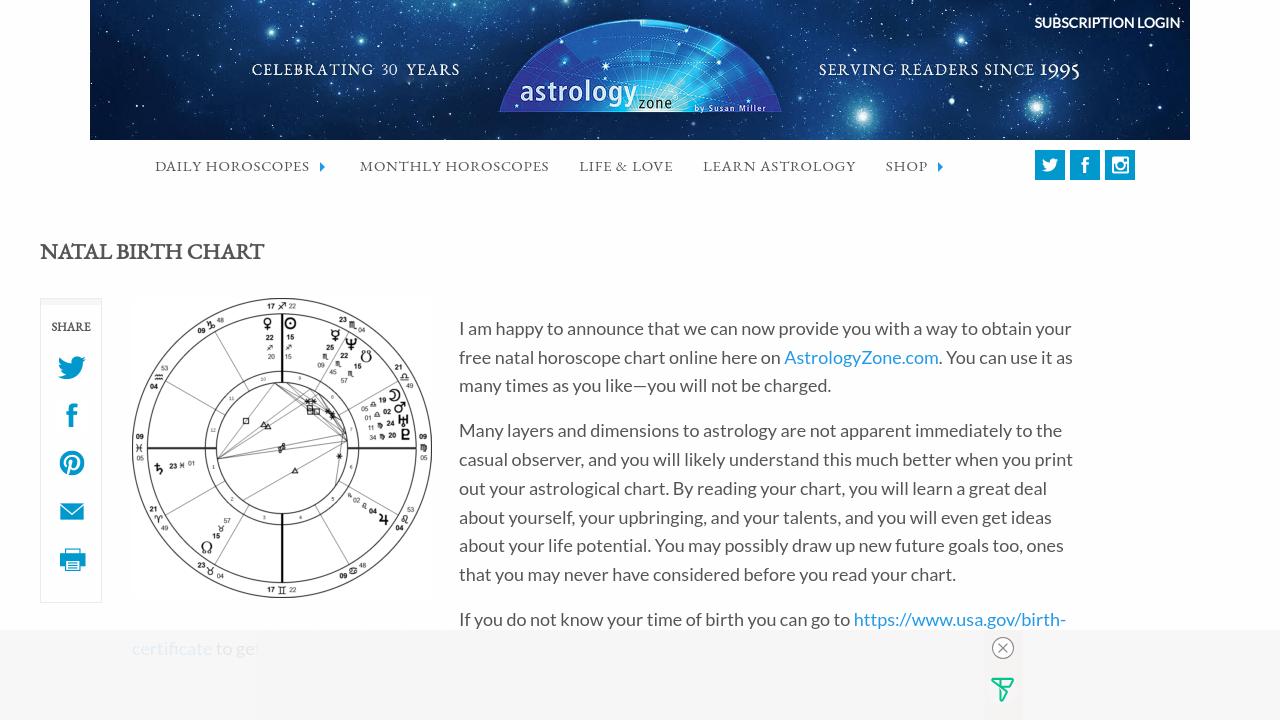
The natal chart is your birth chart, calculated from your birth day, month, year, city and exact time. Astrology Zone notes that it can prompt reflection on your talents and that it does not change over your life.
Solar return
A solar return is a chart cast for the moment the Sun returns to its birth position each year. It offers an annual symbolic frame, distinct from the natal chart. It cannot identify a guaranteed date for a promotion or a successful move.
Houses
Houses are twelve segments of the chart, each linked to an area of life such as daily work or career. Their boundaries depend on birth time and the house system used.
Career Archetype
Astrofluence uses twelve Career Archetypes to describe patterns in chart signals. When enough reliable chart data is available, the calculation can suggest an archetype. Treat it as a starting point for reflection, not a fixed identity or a job assignment.
Takeaway: know which concept you are reading before drawing a conclusion from it.
How to get started
- Find your birth time. Check your birth certificate. Astrology Zone suggests ordering an original copy, since some short-form versions omit the time.
- Keep a two-week energy log. Each day, note when focus was highest, when it dipped and what restored you.
- Compare with one chart theme. Pick a single factor, such as your Moon or Mars, and ask whether your log matches or contradicts the symbolic reading.
- Run the free read. Bring one question about your pace to Read my chart for free.
Takeaway: start with the log; the chart is more useful once you have data to hold it against.
FAQ: Frequently Asked Questions
What should my job be based on my birth chart?
A chart cannot choose your job. Astrologers read placements as prompts about the pace and kind of work that may suit you. Use those prompts to design small experiments, and decide based on what your experience shows.
What is the most accurate birth chart?
The calculation is most precise when your birth date, place and exact time are correct. Accuracy of interpretation is a different matter; it is reflective, so check any reading against your real working patterns.
What are the rarest placements in a birth chart?
Rarity depends on how fast each planet moves and the specific combination involved. For work rhythm, rarity matters less than whether a theme matches your actual energy and pace, which your own log can show.
What are the worst birth chart placements in astrology?
No placement is a career verdict. Challenging themes, like heavy Saturn emphasis, are better read as questions about structure and limits. Each combines with many other layers, so judge usefulness by what you can test.
Do I need my birth time?
For houses and other time-based placements, yes. Without it, Astrofluence does not invent those placements, though birth-date numerology can still be calculated. Your birth certificate is the usual place to find your time.
Can a chart predict my career success?
No. A chart does not prove or predict career success or income. It offers symbolic themes you can reflect on. Outcomes depend on your choices, skills, market and circumstances, which you assess with real evidence.
Conclusion
Your work rhythm shows up most clearly in how your days actually go. A birth chart can help you notice patterns worth checking, especially around recovery, drive and structure, but it stays a lens rather than a proof. Use the reading to sharpen a question, then check it against what happens at work.
One action to test this week: log your energy at three points each workday for two weeks, then compare the pattern to a single chart theme, such as your Moon, and note where it fits and where it does not. For a read built around your question, Read my chart for free.