
Common signs of career misalignment include dreading Mondays even after a restful weekend and lacking motivation for things you are supposed to care about. Astrology can offer reflective questions about those signs, but evidence from your actual work decides what they mean. That split matters. A chart can help you ask a sharper question; your calendar, energy and results answer it. This guide shows how to keep the two apart and still use both.
In this article
Definition: what career misalignment means
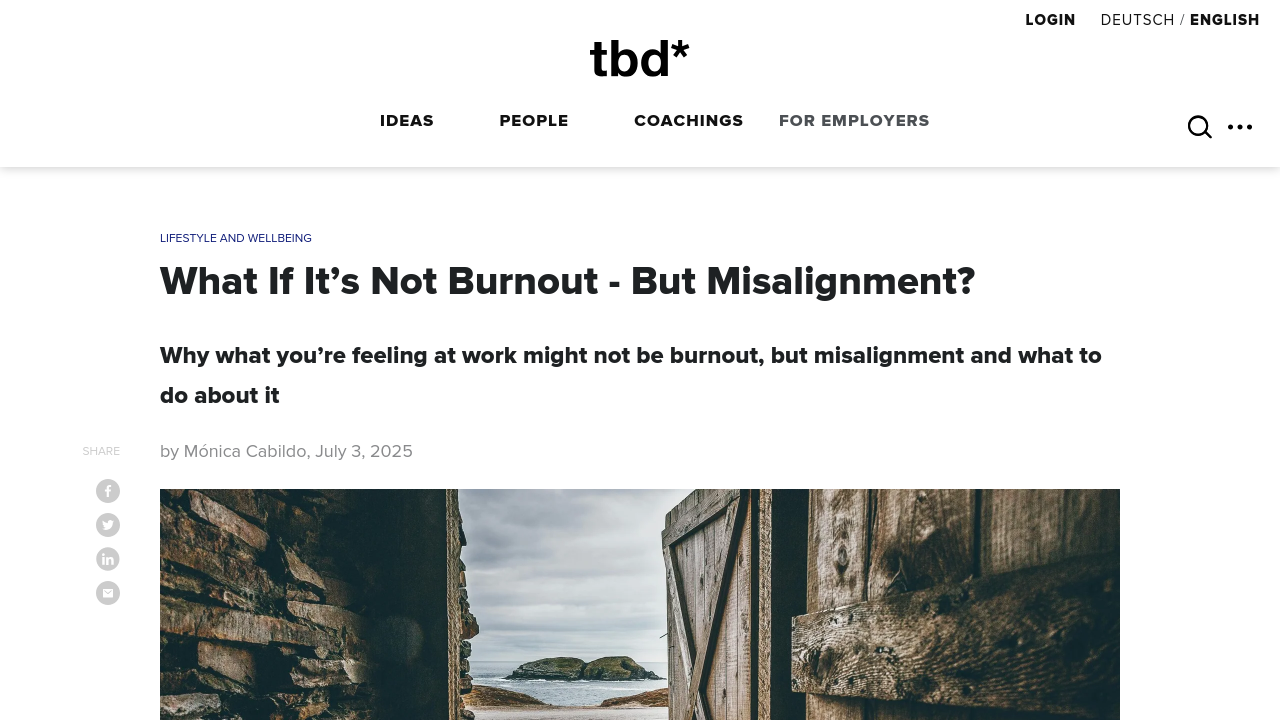
Career misalignment is the state where your work no longer reflects who you are: the goals you chase stop mattering to you, you follow rules you never chose, and you stay productive without feeling fulfilled. In her essay on burnout versus misalignment, career coach Mónica Cabildo draws the line this way: burnout feels like exhaustion from too much, while misalignment feels like emptiness from too little meaning. This is a coaching perspective, not a diagnostic distinction. Dissatisfaction with the work and burnout can coexist; neither can be confirmed by a holiday or a birth chart.
In plain language: ask both whether the demands are sustainable and whether the work matters to you. These are separate questions that can have overlapping answers.
A break can give you useful observations, but it cannot distinguish burnout from career misalignment. Workload, working conditions, health and personal circumstances can overlap. The WHO describes burnout in relation to chronic workplace stress, exhaustion, distance from work and reduced effectiveness. Persistent exhaustion or distress deserves support from a qualified health professional, not a chart-based diagnosis.
Takeaway: note whether rest helped, alongside workload and wellbeing, without treating the answer as a diagnosis.
How to read the signs: symbolic prompts versus work evidence

A birth chart is a map of where the planets sat at the moment and place you were born. Two parts get the most career attention. The Midheaven is the point where the ecliptic meets the upper meridian, traditionally read as public direction and reputation. The houses are twelve slices of the chart, each tied to an area of life; the tenth relates to career and the sixth to daily work and routines. Here, charts are calculated with the tropical zodiac and Placidus houses and read as a lens on how you lead, price, deliver and time your work.
The word that matters there is lens. A chart prompt is symbolic. It can point at a question you have been avoiding. It cannot tell you whether that question is true for your job. That is what work evidence is for.
Sign-by-sign table
The left column adapts themes from Cabildo's essay into work questions. The middle column supplies symbolic prompts; the right column suggests observations. None is a diagnostic test or proof of a cause.
| Sign | Chart lens prompt (symbolic) | Work evidence to check |
|---|---|---|
| Monday dread even after a restful weekend | Midheaven: does the direction you are building toward still feel like yours? | Rate your energy 1 to 5 each morning for two weeks; compare Mondays with the rest |
| Lost motivation for things you are "supposed" to care about | Tenth house: whose definition of success are you working toward? | List your three current goals and mark who set each one |
| Quiet numbness or emptiness | Sixth house: does your daily routine fit the pace you actually work best at? | Note which tasks leave you neutral, drained or lit up for one week |
| Following rules you never chose | Midheaven: is your visible role one you would have picked? | Write down five work rules you follow and whether you agreed to them |
| Feeling unseen even when things look good | Tenth house: where do you want to be recognized, and by whom? | Track who saw your best work this month and whether that mattered to you |
| Scrolling job listings hoping something jumps out | Midheaven: what direction would you name if no title existed? | Save five listings, then note the common thread that pulled you in |
None of the middle column predicts anything. It hands you a question. The right column gives you something you can count.
Hypothetical example: a Sunday-night dread week
Hypothetical: a project manager notices a heavy feeling every Sunday night. Assume she is sleeping well, her workload is normal and she took a full week off last month. A chart reading highlights tenth-house themes around visible leadership, which prompts a question: does she want to be the person running the room rather than the one tracking it?
That is a hypothesis, not a verdict. So she logs her energy for two weeks. The scores dip on days full of status reports and rise on the two days she presented to clients. In this invented example, the notes suggest a pattern: presenting feels more engaging than reporting. They do not prove the cause or settle whether she needs a different job. The next step is a small one, like asking to lead one more client meeting, rather than a resignation letter.
Takeaway: let the chart raise a question and use a short log to gather observations, not a verdict.
Why it matters: three situations where the signs show up
Astrofluence is built for professionals who feel stuck, underpaid or at a crossroads. Each of those situations can hide misalignment behind a more obvious complaint.
Stuck. Hypothetical: someone has held the same role for years, performs well and feels nothing. The temptation is to blame boredom and push through. Flatness across tasks does not identify the cause: workload, health and conditions may also matter. Takeaway: compare tasks and circumstances before deciding what needs to change.
Underpaid. Hypothetical: a designer feels resentful every Monday and assumes it is about salary. Pay may genuinely be the issue, and that deserves its own conversation. But if the work itself also feels empty, a raise may not fix the dread. Takeaway: separate the pay question from the meaning question and test each one.
At a crossroads. Hypothetical: an analyst has two offers and cannot choose. The misalignment signs from the current job are useful data here. Whatever drained them is worth avoiding in the next role. Takeaway: turn current dread into a short list of things the next job must not repeat.
Common misconceptions

Misconception: Misalignment is just burnout
Reality: dissatisfaction with work and burnout can overlap. Cabildo offers a coaching distinction, not a clinical test. Rest can help you notice changes, but its effects do not establish the cause. Consider demands, conditions and support as well as career fit.
Misconception: A chart proves what career you should have
Reality: a chart is a reflective lens, not proof. Astrofluence does not choose jobs, investments or financial moves for you. The chart can suggest a question worth asking. The decision about what to do with the answer stays with you.
Misconception: Monday dread always means quit
Reality: dread is a signal, not a sentence. It can come from one meeting, one manager or one recurring task. Cabildo's own advice is that you do not need to quit everything tomorrow. Narrow down the source first, then decide.
Misconception: Astrology is scientifically proven
Reality: Astrofluence does not claim astrology is scientifically proven. The meaning is interpretive. Treat it as a prompt for reflection and check it against how your work actually goes.
Related concepts
Burnout
An occupational phenomenon associated with chronic workplace stress that has not been successfully managed. Useful question: what demands, resources and support need attention? A career exercise does not diagnose it.
Career stagnation
A stretch with little growth in skills, responsibility or interest. Useful question: what have I learned in the last six months that I could not do before?
Midheaven
The intersection of the ecliptic and upper meridian, traditionally linked to public direction and reputation. Useful question: what do I want to be known for at work?
Solar return
A chart cast for the moment the Sun returns to its birth position each year, read as a reflective lens rather than a forecast. Useful question: what one theme do I want to focus on this year? Treat it as reflection, not a timing signal for decisions.
Career Archetype
Astrofluence uses twelve Career Archetypes, patterns describing how someone tends to work. Where sufficient chart information is available, the score is calculated from chart signals, not from a quiz. It describes a reflective pattern, not a fixed identity. Useful question: does this pattern match how my best weeks actually look?
How to get started
- Log your energy daily for two weeks. Rate mornings and evenings 1 to 5 and note the main task of the day. Use this as a suggested observation period, not a validated assessment or a promise of clear results.
- List the rules you never chose. Write five expectations you follow at work and mark which ones you agreed to and which you inherited.
- Name one question. Not "what should I do with my life" but something testable, like "do I need more visible work?"
- Optional: get a symbolic prompt. If you want a chart lens on that question, Read my chart for free. You will need your birth date, time and place plus that question. If you do not know your birth time, no time-based placements are invented, though birth-date numerology can still be calculated.
Takeaway: one question, one log, two weeks.
FAQ: Frequently Asked Questions
What are 10 signs that it's time to quit my job?
There is no fixed list. Common signals include dread that survives rest, lost motivation, feeling unseen and constant job-board scrolling. Before quitting, test whether the problem is the whole job or one fixable part of it.
What are five signs that I've outgrown my job?
You dread Mondays after a good weekend, goals feel like someone else's, you feel underwhelmed despite success, you keep scrolling listings, and you doubt yourself more than your record justifies. Track which ones persist over weeks.
How to tell if you're disliked at work?
Look at evidence rather than mood: whether you are included in decisions, how feedback is given and whether requests get answered. Feeling unseen can also come from misalignment, so check observable patterns before drawing conclusions.
What are some signs that my career is stagnating?
You are not learning new skills, responsibilities have not grown, and the work feels repetitive. Stagnation is about growth; misalignment is about fit. You can have one without the other, so test them separately.
Is misalignment the same as burnout?
No. Career misalignment describes a perceived mismatch with work, while burnout concerns chronic workplace stress. They can overlap. A week off does not reliably distinguish them; persistent symptoms deserve qualified support.
Can astrology diagnose career misalignment?
No. A chart can offer reflective prompts about direction, routine and visibility, but it cannot confirm misalignment. Your energy logs, goals and results are the evidence. Use the chart to sharpen the question, then decide yourself.
What do I need for a free career read?
Your birth date, birth time and birth place, plus the one career question you keep coming back to. If your birth time is unknown, the read skips time-based placements rather than guessing them.
Conclusion
Monday dread is worth taking seriously, but it is a symptom, not a diagnosis. Notice how rest, workload and working conditions affect it, without trying to diagnose burnout yourself. Use a chart, if you want one, to frame a sharper question about direction or daily rhythm. Then let your own work answer it. This week, try one thing: rate your energy every morning for five workdays and circle the single task that shows up on your lowest-scoring day. That task is your first piece of real evidence.