Try one small paid batch before you turn your hobby into a business. A batch can sell out and still leave nothing for your time. If you’re good at noticing small details, use that skill to track the costs and hours you might overlook. Then see how the same work feels on a deadline. This guide walks through the numbers, a two-week trial and how the Astrofluence read works if you want a prompt for your notes.
Run a small paid test first
Offer a small batch at the price you’d actually charge. Note how many people buy. A friend saying “you should sell these” can be encouraging, but only a sale tells you someone paid that price.
Set a spending limit and an end date. Check sales against the costs and hours you record.
A hypothetical example with numbers
These are hypothetical amounts in US dollars. The example counts only the costs listed and leaves taxes out.
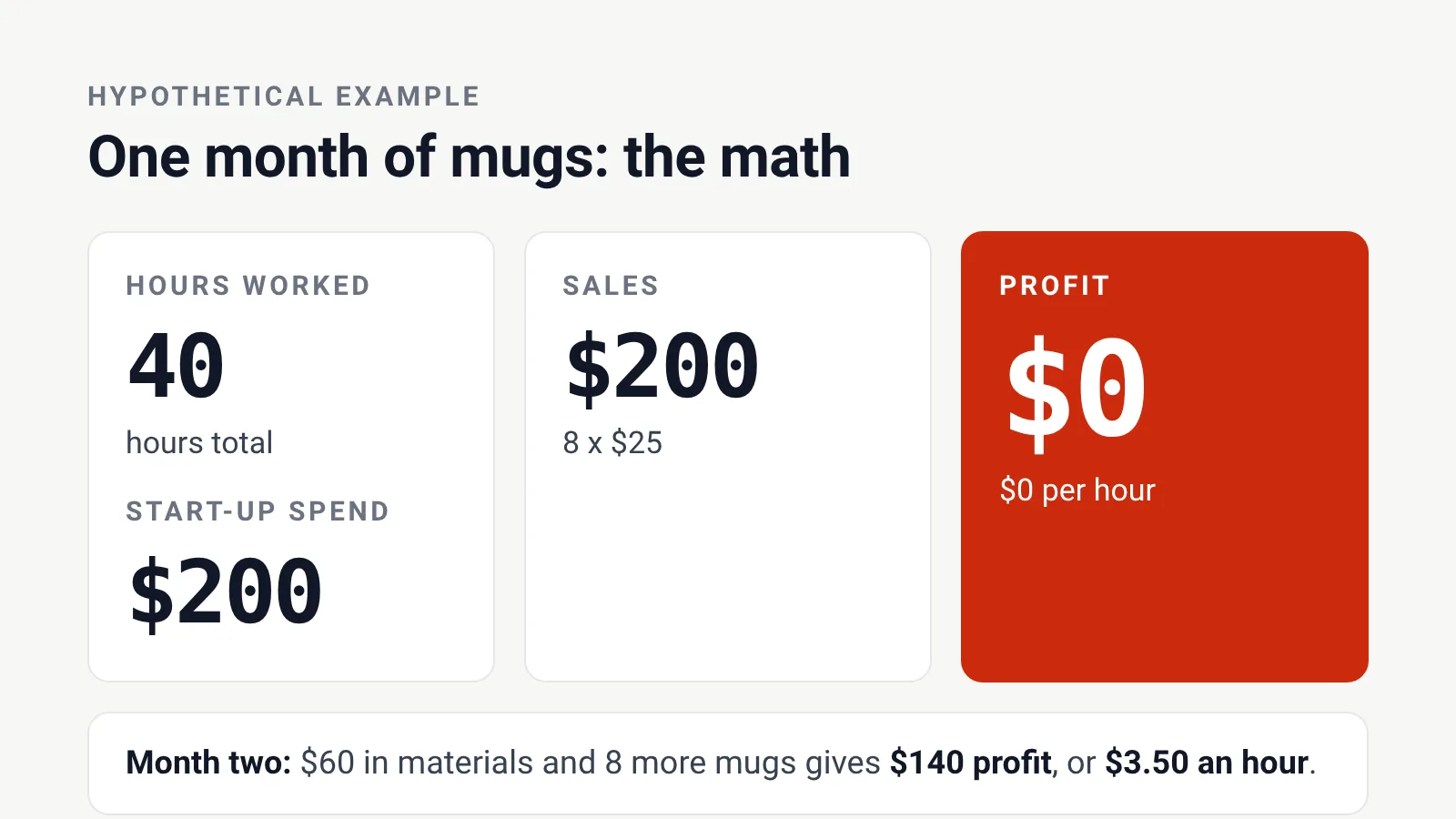
Say you make ceramic mugs on weekends. For one month you put in 10 hours a week (40 hours total), spend $200 on clay, glaze and a few listing fees, and sell 8 mugs at $25 each.
| Item | Example figure |
|---|---|
| Hours worked | 40 |
| Costs for the first batch | $200 |
| Sales | 8 x $25 = $200 |
| Amount left after listed costs | $200 - $200 = $0 |
| Amount left per hour | $0 / 40 = $0 per hour |
Some of that $200 may be one-time spending. A jar of glaze could last through another batch. If the second month takes the same 40 hours and you sell 8 more mugs at $25 each with $60 in costs, you have $140 left, or $3.50 an hour. Could a higher price or a different batch size change the result?
What the test tells you and what it doesn't
A small test tells you whether strangers will pay, roughly what it costs you, and how long things really take. It doesn't tell you what happens at ten times the volume, whether demand lasts, or whether you'll still love it in a year.
Use the test to decide what to try next. Look for repeat sales and measure the costs again before you make bigger commitments.
Takeaway: run one paid test this month and write down hours, spend and sales.
Test whether you still enjoy it on a schedule

When someone pays for a piece, you may have to finish it on a day you wouldn’t have chosen. Notice how that changes the work for you.
Deadlines, repeat orders and customers
Three things tend to change the feeling:
- Deadlines. Painting on a Sunday because you feel like it is different from painting because an order ships Tuesday.
- Repeats. Making the same design twenty times can be soothing for some people and dull for others.
- Customers. Messages, custom requests, returns can take time outside the craft.
Find out which parts you enjoy and which ones you’d rather do less often.
A two-week "treat it like work" trial
Try this for two weeks:
- Set fixed hours, for example Tuesday and Thursday evenings plus Saturday morning. At the end, check: did you show up for most sessions?
- Take one custom order with a real deadline. Check: did you deliver on time, and how did the last day feel?
- Keep a short note after each session: what gave you energy, what drained you. Check: you have a note for every session.
- Handle one small admin task, like pricing a product or answering a buyer question. Check: it's done, and you know how long it took.
At the end, read your notes. If admin took most of your energy, try changing how you handle it. If the craft itself wore you out, consider which projects you’d still enjoy making.
Takeaway: record how a deadline feels alongside the sale itself.
Test your money and time limits

Record the bag of clay you bought, the hours you spent packing orders and the money you took in. It’s easier to compare batches when the same details are in each record.
Hobby income vs business income
If you’re unsure how to report sales where you live, check with your local tax authority or a tax professional. Keep the notes from the test handy.
Meanwhile, start a simple spreadsheet with four columns: date, what you spent, what you earned, and hours. Update it after each sale so you can compare batches.
Keeping your day job while you try
If you have a steady income, consider a test you can fit around it. Choosing a career for money or passion is a related question worth thinking through. Plan a batch you can afford even if nothing sells.
Ask yourself a few honest questions:
- How many hours a week can you give this while leaving enough time for sleep and family?
- How much could you spend on testing and be fine if you lost it all?
- What would need to be true, in numbers you write down now, before you'd consider going bigger?
Writing your limits down before you start keeps excitement from setting them for you.
Takeaway: set a spending cap and a weekly hour cap, then track both.
Use a reflective lens on your work rhythm
Some people find it helpful to step back and ask how they like to work in general. Do you do best in bursts or steady routines? Alone or with people? Does money pressure motivate you or freeze you? Look for an answer in the sessions you logged.
This is where the Astrofluence free career read can fit in, as one optional prompt. It covers four areas: career direction, work rhythm, money pattern and timing.
What an astrology read can and can't tell you
A birth chart maps the sky for your birth date, time and place. In astrology, houses are twelve sections of that chart used to talk about different parts of life.
If you don’t know your birth time, Astrofluence uses noon as an estimate. The Rising sign, Midheaven and houses are approximate.
If the read prompts a question about your work rhythm, compare it with two sessions from your trial. Use actual orders to judge whether someone will buy your mugs.
Takeaway: use a question from the read to look again at your trial notes.
Decide: keep it a hobby, side business or full business
When deciding what side hustle to start, there are really three options, and all of them are fine. Not everything you love needs to earn money.
| Option | Fits when |
|---|---|
| Keep it a hobby | It's your rest, and selling made it stressful |
| Side business | People pay, you enjoy it on a schedule, but the numbers are small |
| Grow toward full business | Demand repeats, the amount left per hour is rising, and your limits hold |
Signs to keep it a hobby
- You dreaded the deadline sessions in your trial.
- Selling made you rush the parts you used to enjoy.
- You'd rather protect it as the one thing nobody grades.
You can keep the craft as time for yourself, even if someone offers to buy what you make.
Signs to grow it slowly
- Strangers bought, and some came back.
- You had more left per hour in your second test.
- You stayed inside your spending and hour caps.
- Admin felt annoying but manageable.
If that's you, grow in small steps: raise prices a little, test a second product, or add one more selling day. Check the spreadsheet after each change.
Takeaway: pick the option that fits your results and the limits you wrote down.
FAQ: Frequently Asked Questions
Should a person have a hobby?
Yes, for many people a hobby gives rest, play and something done just for fun. It doesn't have to earn money or improve your career. Keeping one thing purely enjoyable is a fine choice.
Is $5,000 enough to start a business?
List the costs for what you want to make, including anything you’d need to buy or rent. Compare your total with your budget. Start with a small test you can afford, and record what you actually spend.
How long should I test before quitting my job?
There's no fixed timeline. Test long enough to see repeat sales, steady costs and how you feel on deadlines. Keep your income while you learn, and decide using your own written limits and numbers.
Show more questions
Can I run a business and keep my hobby fun?
Often, yes. Keep some projects that are never for sale, set fixed work hours, and say no to orders that drain you. Watch your energy notes and adjust before resentment builds.
Do I need a business license to sell my crafts?
It depends on your state, city and how you sell. Before you offer an item for sale, ask your local licensing office what applies to that item and how you plan to sell it. Ask your local tax authority about reporting sales.
Conclusion: your next small step
Pick one small batch and a spending limit this month. Set a price and track hours, costs and sales. Then try two weeks of set hours and compare the sessions you choose with the ones you do to meet a deadline.
If you’d like a question about your work rhythm to bring to your notes, Read my chart for free. Use the time and sales you recorded to decide what to try next.
Want the next post when it's out? Follow by RSS